MMA.SOCIAL

Install MMA.SOCIAL

    Highest Strike Volume in UFC History

    Significant strikes landed per 15 minutes, minimum 5 fights and 45 minutes of octagon time

    2026 Stats

    1
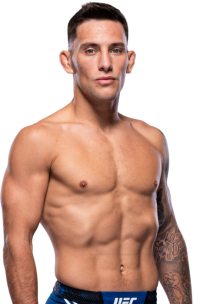
    Joshua Van
    Joshua Van FLW · 10-1
    126.5
    2
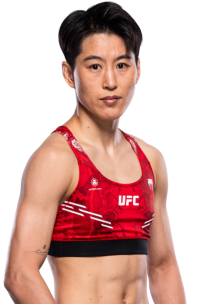
    Casey O'Neill
    Casey O'Neill WFLW · 6-2
    118.3
    3
    Leslie Smith
    Leslie Smith WBW · 4-3
    113.3
    4
    Emily Ducote
    Emily Ducote WSW · 2-3
    111.8
    5
    Shane Burgos
    Shane Burgos FW · 8-3
    111.0
    Advertisement
    6
    Esteban Ribovics
    Esteban Ribovics LW · 4-3
    108.6
    7
    Daniel Rodriguez
    Daniel Rodriguez WW · 10-4
    108.0
    8
    Victor Henry
    Victor Henry BW · 4-2
    107.6
    9
    Joanne Wood
    Joanne Wood WFLW · 9-8
    106.6
    10
    Cristiane Justino
    Cristiane Justino WFW · 6-1
    106.1
    11
    Billy Quarantillo
    Billy Quarantillo FW · 6-5
    105.6
    12
    Alice Ardelean
    Alice Ardelean WSW · 3-2
    105.0
    13
    Max Holloway
    Max Holloway LW · 24-9
    103.8
    14
    Wang Cong
    Wang Cong WFLW · 5-1
    102.6
    15
    Carlos Ulberg
    Carlos Ulberg LHW · 10-1
    99.1
    16
    Luke Sanders
    Luke Sanders BW · 3-5
    99.1
    17
    King Green
    King Green LW · 17-12-1
    98.9
    18
    Frank Camacho
    Frank Camacho LW · 2-6
    98.5
    19
    Cain Velasquez
    Cain Velasquez HW · 12-3
    97.1
    20
    Diana Belbita
    Diana Belbita WSW · 2-6
    96.8
    21
    Jessica Andrade
    Jessica Andrade WSW · 17-13
    95.6
    22
    Nasrat Haqparast
    Nasrat Haqparast LW · 10-5
    95.5
    23
    Justin Gaethje
    Justin Gaethje LW · 11-5
    94.3
    24
    Parker Porter
    Parker Porter HW · 4-4
    94.3
    25
    Joanna Jedrzejczyk
    Joanna Jedrzejczyk WSW · 10-5
    94.2
    26
    Michael Morales
    Michael Morales WW · 7-0
    93.7
    27
    Julia Polastri
    Julia Polastri WSW · 2-3
    93.4
    28
    Chris Padilla
    Chris Padilla LW · 4-0-1
    92.9
    29
    Chris Gruetzemacher
    Chris Gruetzemacher LW · 3-4
    92.6
    30
    Bolaji Oki
    Bolaji Oki LW · 2-3
    92.6
    31
    Paulo Costa
    Paulo Costa LHW · 8-4
    92.3
    32
    Navajo Stirling
    Navajo Stirling LHW · 5-0
    92.2
    33
    Sabina Mazo
    Sabina Mazo WFLW · 3-4
    91.5
    34
    Julian Erosa
    Julian Erosa FW · 9-9
    91.0
    35
    Jose Delgado
    Jose Delgado FW · 4-1
    90.8
    36
    Chase Sherman HW · 4-11
    90.7
    37
    Alexander Volkanovski
    Alexander Volkanovski FW · 15-3
    89.9
    38
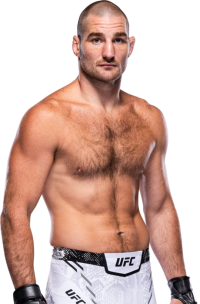
    Sean Strickland
    Sean Strickland MW · 18-7
    89.6
    39
    Mason Jones
    Mason Jones LW · 4-2
    89.6
    40
    Sean O'Malley
    Sean O'Malley BW · 12-3
    89.5
    41
    Adrian Yanez
    Adrian Yanez BW · 7-3-1
    88.8
    42
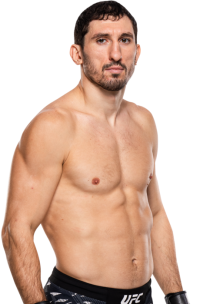
    Armen Petrosyan
    Armen Petrosyan MW · 3-4
    88.6
    43
    Jamahal Hill
    Jamahal Hill LHW · 6-4
    88.4
    44
    Payton Talbott
    Payton Talbott BW · 5-1
    88.1
    45
    Sean Woodson
    Sean Woodson FW · 7-2-1
    87.6
    46
    Jake Collier
    Jake Collier HW · 5-9
    87.1
    47
    Ignacio Bahamondes
    Ignacio Bahamondes LW · 6-4
    87.0
    48
    Michal Oleksiejczuk
    Michal Oleksiejczuk MW · 10-8
    85.9
    49
    Ange Loosa
    Ange Loosa WW · 2-3
    85.3
    50
    Chidi Njokuani
    Chidi Njokuani WW · 5-5
    85.1

    About Highest Strike Volume in UFC History

    This leaderboard ranks UFC fighters by striking pace: significant strikes landed per 15 minutes of octagon time. Rather than counting career totals, which simply reward whoever has fought longest, we sum every significant strike a fighter has landed and every second they have actually spent in a live fight, then express the ratio as a rate across a full three-round bout. Fighters qualify with at least five scored fights and 45 minutes of recorded octagon time, a double floor that stops a run of quick finishes from producing an impossible number.

    How the per-15-minute normalisation works

    Fight time is calculated from the round and clock time at which each bout ended, so a fight stopped at 2:30 of round two counts as seven and a half minutes, not ten. Those seconds are added across a fighter's whole career and the landed strikes are added the same way, and only then is the division performed. This matters: averaging each fight's individual pace and then averaging those averages would let a thirty-second sprint count as heavily as a twenty-five-minute title fight. By summing first, the metric becomes a true time-weighted career pace, and the fighters at the top are the ones who genuinely never stop working.

    High output is one of the most reliable predictors of decision wins in the sport. Judges reward visible activity, and a fighter landing a hundred-plus significant strikes across three rounds is very difficult to out-score without a finish. It is also a physical statement, because that pace demands cardio most of the roster cannot hold. What it does not tell you is how hard those strikes land, or what came back the other way. Some of the busiest fighters on this list built their numbers in fights they lost, trading in the pocket rather than dominating from range.

    Use this page as the output half of a striking profile and read it against accuracy for efficiency and striking differential for the defensive side of the exchange. Our ELO rankings show whether the workrate has actually converted into standing, and the rest of our UFC stats hub covers finishing, grappling, and durability.

    Frequently Asked Questions

    What does strikes per 15 minutes mean?
    Fifteen minutes is the length of a full three-round fight, so the figure answers a simple question: if this fighter went the distance, how many significant strikes would they land? We total a fighter's career significant strikes landed, total the actual seconds they have spent fighting, and scale the ratio to a 900-second fight. A fighter at 100 lands roughly a hundred significant strikes across a full three rounds.
    Why normalise by time instead of just counting strikes?
    Raw strike totals reward longevity, not pace. A twenty-fight veteran will out-land a six-fight prospect on volume even if the prospect throws twice as fast. Dividing by octagon time removes career length from the equation entirely and isolates how busy a fighter actually is while the fight is live, which is what people mean when they talk about output.
    Why are there two minimums instead of one?
    Because a fight-count floor alone is not enough for a pace stat. A fighter with five first-round knockouts might have only eight minutes of recorded octagon time, and a handful of strikes across those eight minutes projects to an enormous per-15-minute figure. Requiring 45 minutes of cage time as well as five fights means every fighter here has sustained the pace over roughly three full fights' worth of action.
    Does high volume mean a fighter is winning the striking?
    Not necessarily. Volume counts what a fighter lands, not what they absorb, so a fighter can post huge numbers in fights they lost by taking part in wild exchanges. It also does not weigh strike quality, and a career of jabs and leg kicks scores higher than a career of fight-ending power shots. Read it alongside striking differential and accuracy before drawing conclusions.

    Explore More Stats

    Dive into finish rates, division breakdowns, and fighter comparisons

    Stats Hub