MMA.SOCIAL

Install MMA.SOCIAL

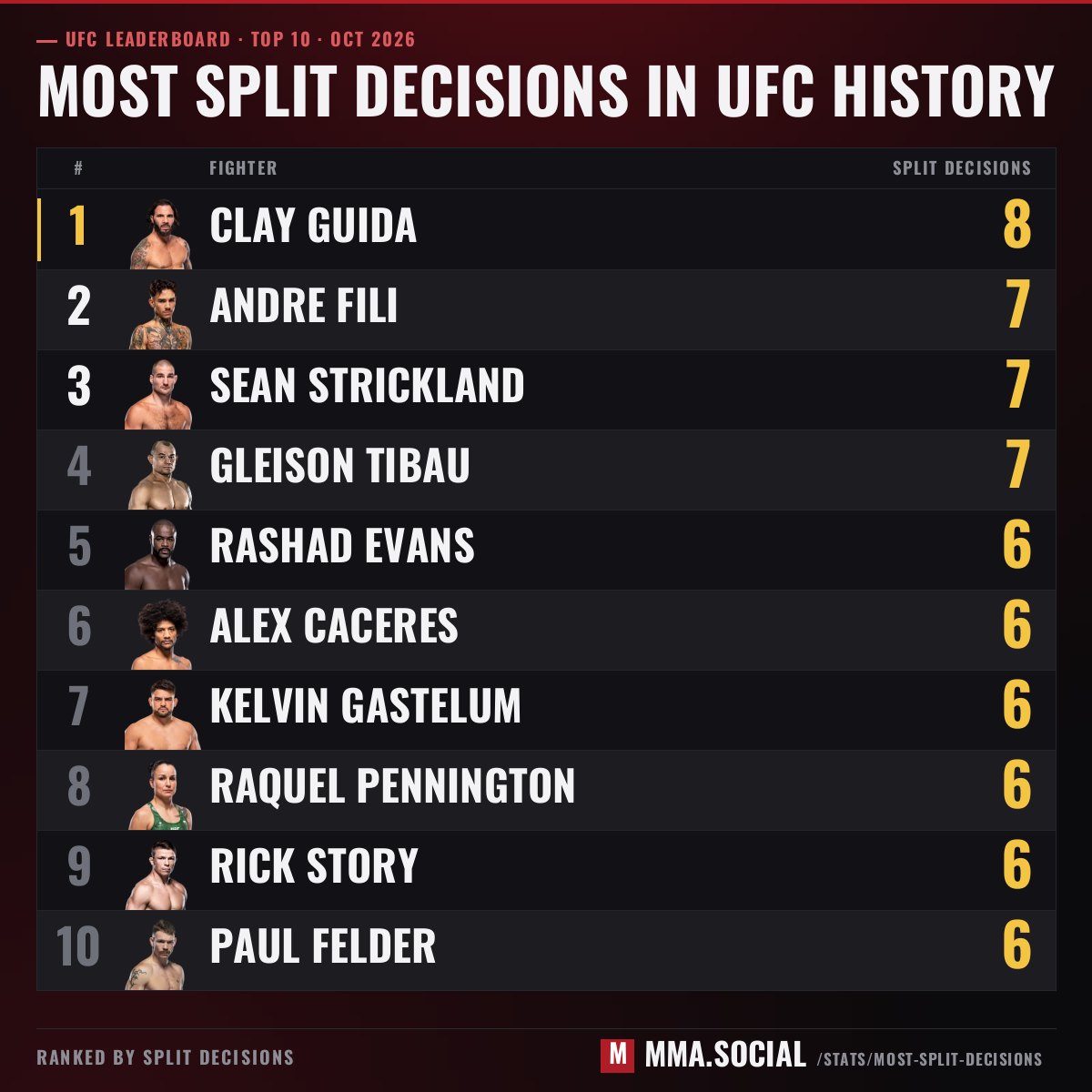
    Most Split Decisions in UFC History

    2026 Stats

    About Most Split Decisions in UFC History

    Fighters the judges could never agree on — win or lose

    This leaderboard ranks UFC fighters by how many of their fights ended in a split decision, counting wins and losses together. A split decision means two of the three judges saw the fight one way and the third saw it the other, so by definition every bout on this page could just as easily have been scored the other way. The fighters at the top have lived in that margin more than anyone else in the promotion.

    Why the total matters more than the wins

    Our split decision wins board answers a different question: who keeps coming out on the right side of the coin flip. That is worth knowing, but it quietly hides the fighters who have been on the wrong side just as often. Counting both directions is the better measure of a style that produces disputed rounds, which is why each name here carries its own win-loss split underneath.

    Two very different careers land in the same place on this list. The first is stylistic: pressure fighters, volume grapplers and counter-strikers who edge exchanges rather than dominate them generate close rounds against everyone. The second is competitive level — elite opposition is simply harder to beat decisively, so contenders accumulate close fights the deeper they go. Reading this page alongside a fighter's finish rate usually tells you which of the two you are looking at.

    Judging remains the most argued-about part of mixed martial arts, and every entry here represents a night where at least one official disagreed with the result. Compare these names with our ELO rankings, which weigh how a fight was won rather than just that it was won, and browse the rest of our UFC statistics to see the styles behind the scorecards.

    Frequently Asked Questions

    What is a split decision?
    A split decision means the three cageside judges did not agree: two scored the bout for one fighter and the third scored it for the other. It is the narrowest way a fight that goes the distance can be settled, sitting between a unanimous decision, where all three judges agree, and a majority decision, where two judges pick a winner and the third scores it a draw.
    How is this different from the split decision wins leaderboard?
    This board counts every split decision a fighter has been in, whether they won it or lost it. The wins leaderboard counts only the ones that went their way. The difference matters: a fighter with five split wins and no split losses and a fighter with three of each have both spent their careers in razor-thin fights, but only this page shows the second one. The W-L breakdown under each name gives you both views at once.
    Does fighting a lot of split decisions mean a fighter is bad?
    No — more often it says something about style and level of opposition. Fighters who grind, clinch and out-work opponents in rounds without a clear defining moment tend to produce close scorecards no matter who they face, and the deeper into the rankings a fighter goes, the harder it is to win decisively. Appearing high on this list usually marks a competitive fighter in difficult fights rather than a lucky or limited one.
    Why might the wins and losses not add up to the total?
    A small number of bouts in our database record the method as a split decision without a recorded winner, usually where a result was later amended or the source data was incomplete. Rather than guess, we count wins and losses separately and note any remainder as unrecorded, so the breakdown never credits a fighter with a loss the data does not actually show.
    Where does this data come from?
    We read the official result method recorded for every bout in our database and count the fights each fighter contested that ended in a split decision, from either corner. It updates automatically as new results are entered, so a fighter who edges — or drops — a close one on Saturday can appear here within hours.

    Explore More Stats

    Dive into finish rates, division breakdowns, and fighter comparisons

    Stats Hub