Best Striking Defense in UFC History

Filters All divisions · All time · 10+ fights

1
Georges St-Pierre
Georges St-Pierre
73.1% OPP. MISSES
2
Ryan Bader
Ryan Bader
71.8% OPP. MISSES
3
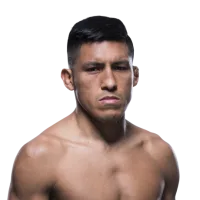
Enrique Barzola
Enrique Barzola
68.7% OPP. MISSES
4
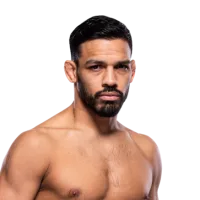
Julio Arce
Julio Arce
68.4% OPP. MISSES
5
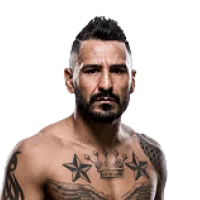
Francisco Rivera
Francisco Rivera
68.3% OPP. MISSES
6
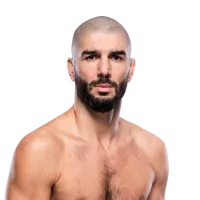
Aiemann Zahabi
Aiemann Zahabi
68.2% OPP. MISSES
7
John Makdessi
John Makdessi
68.0% OPP. MISSES
8
Yves Edwards
Yves Edwards
67.8% OPP. MISSES
Advertisement
9
Chad Mendes
Chad Mendes
67.5% OPP. MISSES
10
Demetrious Johnson
Demetrious Johnson
67.2% OPP. MISSES
11
Miles Johns
Miles Johns
67.2% OPP. MISSES
12
Gray Maynard
Gray Maynard
66.7% OPP. MISSES
Advertisement
13
Raphael Assuncao
Raphael Assuncao
66.0% OPP. MISSES
14
Manon Fiorot
Manon Fiorot
66.0% OPP. MISSES
15
Frankie Edgar
Frankie Edgar
65.9% OPP. MISSES

Your move

2026 Stats

About Best Striking Defense in UFC History

Share of opponent significant strikes that missed. Minimum 10 measured UFC bouts and 1,000 opponent attempts faced.

This leaderboard ranks UFC fighters by striking defense: the percentage of opponent significant strikes that missed. It is the defensive counterpart to our striking accuracy board, and it is built the same way, from the raw round-by-round records rather than any stored percentage. Because a fighter's own stat line says nothing about what was thrown at them, each figure is assembled from the opponent's rows in the same fight, summed across an entire career. To qualify a fighter needs at least 10 measured UFC bouts and 1,000 opponent significant-strike attempts faced, so no percentage on the page rests on a handful of fights.

What the number does and does not prove

Striking defense rewards a specific and unglamorous set of skills: head movement that makes an opponent commit to nothing, a long guard that turns power shots into arm strikes, and above all footwork that keeps a fighter at a range where the opponent has to reach. The leaders here tend to be fighters who forced opponents to throw from bad positions all night. It is worth noting how much of the top of the board belongs to wrestlers and grapplers, whose threat of a takedown makes strikers hesitant and off-balance when they do throw.

The metric has a real blind spot, and it is the same one that affects every rate stat. This is a miss rate, not a damage rate. It counts the share of attempts that failed, so it says nothing about how hard the ones that landed were, and it does not reward a fighter for facing fewer strikes in the first place. A fighter who controls position for fifteen minutes and is barely touched will not appear high on this list unless the few strikes aimed at him also missed. The honest reading is that this measures how difficult a fighter is to hit when someone is actually trying, which is exactly the question the raw strikes absorbed totals cannot answer.

The most useful way to read this page is in pairs. Set it against striking accuracy to find the fighters who are both hard to hit and precise, against fewest strikes absorbed per minute for the volume view of the same question, against worst striking defense for the other end of this scale, and against takedown defense to see who closed off both routes at once. Then check the leaders against our ELO rankings to see whether that defensive foundation actually turned into wins, and browse the rest of the UFC stats hub for the offensive and durability numbers that complete the picture.

Frequently Asked Questions

Who has the best striking defense in UFC history?
Georges St-Pierre, with 73.1% OPP. misses. Second: Ryan Bader (71.8%). Third: Enrique Barzola (68.7%). Counted from UFC bouts recorded on MMA.SOCIAL — UFC appearances only, not a fighter's full professional record.
How is striking defense calculated on this page?
It is built from the opponent's side of the ledger. For every scored round we take the opponent's own significant-strike line, which records strikes landed out of strikes attempted, and total both figures across a fighter's whole career. Striking defense is the share of those attempts that missed: attempts faced minus strikes absorbed, divided by attempts faced. Georges St-Pierre is the benchmark: opponents landed only 496 of the 1,842 significant strikes they threw at him across 22 measured UFC bouts, so he stopped 1,346 of them for 73.1 percent. Sites that copy UFCStats print whole numbers, so he appears there as 73 percent.
Why does a fighter need 10 bouts and 1,000 opponent attempts to appear?
Because one floor on its own is not enough, and we tested the looser version before settling here. At a minimum of 5 bouts and 500 attempts faced, the board seats Danielle Taylor fourth on the strength of five nights and 876 attempts, and Mara Romero Borella fifth off seven bouts and 565 attempts. A defensive rate built from five fights describes a stretch of favourable matchmaking, not a career trait. Requiring 10 measured bouts and 1,000 opponent attempts leaves a pool of a few hundred fighters with real careers behind them, and the resulting top ten are all recognisable defensive fighters. The same gate is used on our worst striking defense board, so both ends describe the same population.
Is a high figure the same as being hard to hit?
Not quite, and this is the important distinction. The number is a miss rate, not a per-minute absorption rate: it answers what share of the strikes aimed at you failed to land, not how much damage you took per round. A wrestler who is rarely hit because he spends whole rounds in top control gets no credit here unless his opponents also miss when they do throw. The basis matters too, since the denominator is opponent attempts rather than time. Across every measured round in the database opponents miss a little over half of their significant strikes, so the league-wide baseline sits around 55 percent; qualifiers run from below 40 percent at the bottom of the scale to the low 70s at the top. Read it next to total strikes absorbed to separate fighters who avoid strikes from fighters who simply face few.
Why do some famous strikers rank lower than expected?
Partly because elite opposition lands more, and partly because of what the data covers. Demetrious Johnson finished his UFC run at 67.2 percent, but Anderson Silva, famous for making opponents miss, finished at 59.5 percent - outside this top 50 - which reflects years of title fights against the best strikers in his division rather than any defensive flaw. Coverage is the other caveat: round-by-round significant-strike records exist for 21 of the 31 bouts from 1990 to 1994 and 147 of 193 from 1995 to 1999, then for every completed bout from 2000 onward. Careers that ran mostly in the 1990s are measured from a partial record, which is why the count shown is measured bouts rather than total career fights.

Every UFC statistics leaderboard

Stats Hub
Best Striking Defense in UFC History - top 10 (MMA.SOCIAL): 1. Georges St-Pierre (73.1%), 2. Ryan Bader (71.8%), 3. Enrique Barzola (68.7%), 4. Julio Arce (68.4%), 5. Francisco Rivera (68.3%), 6. Aiemann Zahabi (68.2%), 7. John Makdessi (68.0%), 8. Yves Edwards (67.8%), 9. Chad Mendes (67.5%), 10. Demetrious Johnson (67.2%)
Best Striking Defense in UFC History - top 10, updated Oct 30, 2026.
Share image

Best Striking Defense in UFC History: top 10

The top 10 as one image. Free to share, updated after every UFC card.

Who has the best striking defense in UFC history?

Georges St-Pierre, with 73.1% OPP. misses.

Second: Ryan Bader (71.8%). Third: Enrique Barzola (68.7%).

Counted from UFC bouts recorded on MMA.SOCIAL — UFC appearances only, not a fighter's full professional record.